Your hero foundation has 40 shades. Shades 01 through 10 are selling fast. Shades 35 through 40 are slow movers with plenty of stock. Shopify shows the product as available.
Meanwhile, shade 08 — your second bestseller — has 3 units left. At current velocity, it will zero out in two days. Three customers with shade 08 in their cart will complete checkout, pay, and receive cancellation emails. Two of them will not come back.
This scenario plays out across beauty brands on Shopify every day. It is not a configuration error. It is the structural gap between Shopify's product-level inventory display and the shade-level operational reality of a cosmetics catalogue.
Why Beauty Inventory Is Different
No other product category generates SKU complexity at the scale that beauty does. A single foundation product in 40 shades, 3 formulas, and 2 finishes creates 240 variants. A 20-product skincare and makeup line can generate 1,000+ active variants — each with its own demand curve, its own expiry timeline, and its own customer base of repeat buyers.
This complexity creates operational problems that compound:
- Bestselling shades sell out fastest — the shades that match the most skin tones move fastest, leaving slow-moving shades to dominate the product-level availability signal
- Reformulations and seasonal shades create inventory transitions where old and new formula stock coexists — FIFO matters both for freshness and for managing the transition
- High-LTV customers are shade-loyal — a customer who found their perfect shade will reorder that specific variant repeatedly; losing that shade to a stockout risks the entire customer relationship
- Return rates carry diagnostic information — a shade with a rising return rate often signals a quality issue or a shade-match problem that needs intervention before it becomes a brand reputation issue
The Four Operational Gaps Shopify Cannot Fill for Beauty Brands
1.Product-level availability masking shade stockouts
Shopify's storefront logic shows a product as available if any variant has remaining stock. For a foundation with 40 shades, this means the product appears fully available until every single shade has zeroed out — an essentially impossible condition that never triggers the out-of-stock state.
The fix requires two layers. First, configure your Shopify theme to show shade-specific availability in the colour selector — most themes support variant-level sold-out states that visually communicate which shades are unavailable before a customer adds to cart. Second, implement shade-level monitoring in your warehouse system so your operations team sees which shades are approaching zero with enough lead time to reorder.
The theme fix prevents customer-facing disappointment. The warehouse fix prevents the stockout from happening in the first place.
2.No FIFO enforcement for expiry-sensitive stock
Every beauty product has an expiry date. Shopify has no concept of batch dates, lot numbers, or expiry tracking. Stock is stock — there is no architecture to ensure that the oldest units ship first, or to identify which customers received stock from a specific production batch.
For a beauty brand, this creates three distinct risks:
Expiry write-offs: Without FIFO tracking, newer stock gets picked before older stock when pickers take the most accessible units rather than the oldest. Older batches accumulate at the back of shelves and approach expiry unnoticed until a stock count reveals the problem.
Recall exposure: A quality issue on a specific batch — a contamination, a formula deviation, a packaging defect — requires identifying which customers received units from that batch. Without batch records linked to outbound orders, the only option is a full customer base notification.
Reformulation transitions: When a formula changes, managing the sellthrough of old formula stock before new formula stock ships requires batch-level visibility that Shopify cannot provide.
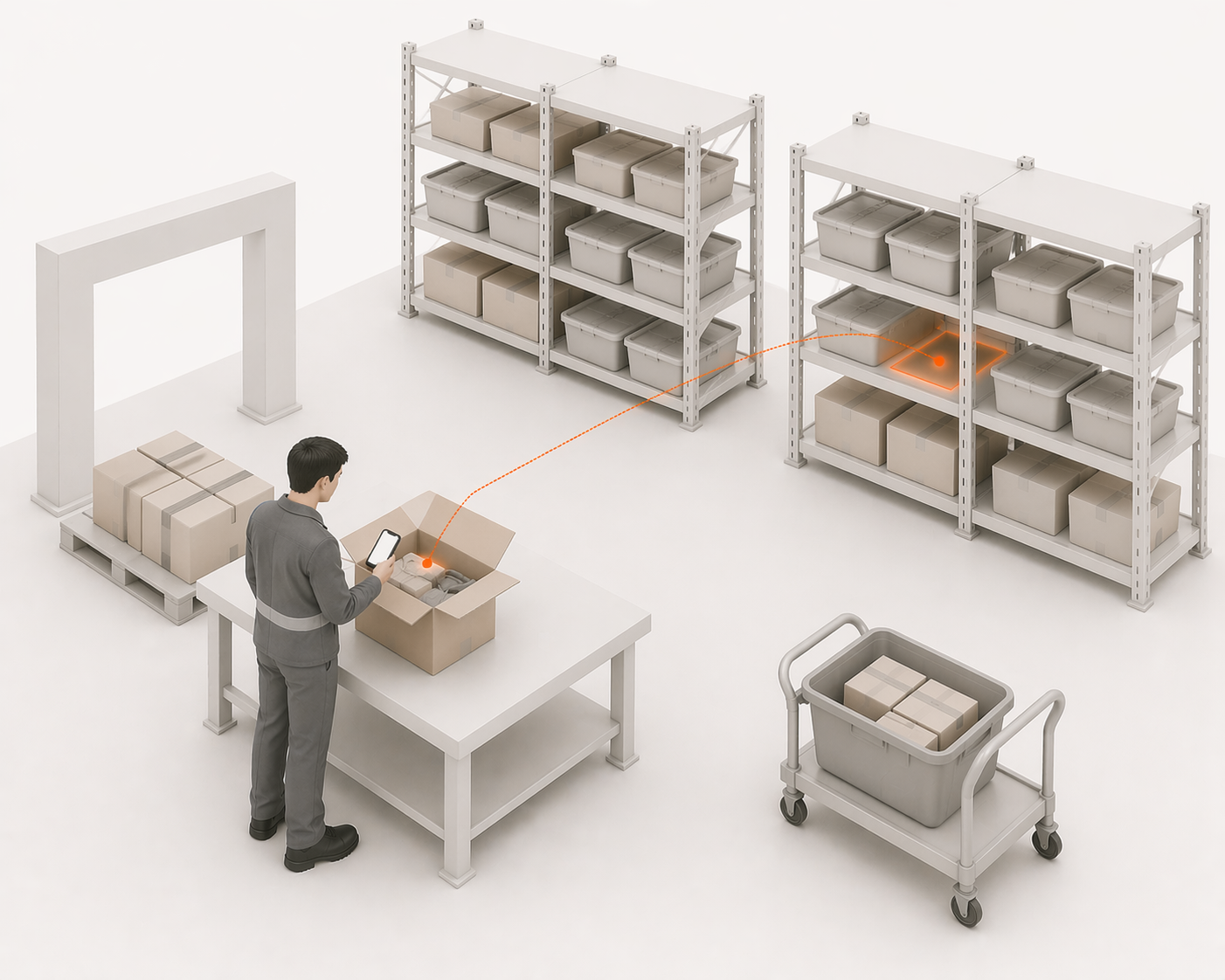
The fix is scan-to-receive with batch number and expiry date capture. Every delivery is received into a specific batch record. Every pick pulls from the oldest available batch first. Every order has a complete chain from PO receipt to customer delivery.
3.High-LTV shade-loyal customers churn invisibly
Beauty customers are among the most loyal repeat buyers in ecommerce — when they find a shade that works, they reorder it for years. A customer who has found their perfect foundation shade and reorders every 8 weeks represents $400–$800 in annual revenue and near-zero acquisition cost.
When that shade goes out of stock without warning, the customer has two options: wait for restock (if they even know when it is coming) or buy from a competitor. Most choose the competitor — and because beauty is a tactile, trust-based category, once a customer switches and finds something that works, they rarely come back.
Shopify has no visibility into this churn. The customer simply stops ordering. No alert fires. No signal appears. The revenue disappears quietly into a repeat purchase rate metric that moves a fraction of a percent.
The operational fix combines shade-level demand velocity with customer purchase cadence: identifying which high-LTV customers are overdue a reorder of a shade that is currently low on stock, and either proactively communicating restock timelines or triggering a reorder before the stockout occurs.
4.Return rates by shade carry diagnostic intelligence you cannot see
When a shade has a rising return rate, it almost always signals one of three things: a quality issue with a specific batch, a shade description or photography problem that creates mismatched expectations, or a formula change that existing customers are rejecting.
Shopify's returns data is not structured to surface this. Returns are processed at the order level. Seeing the return rate for a specific shade variant over time — and comparing it against the return rate for other shades in the same product — requires aggregating data that Shopify does not naturally connect.
The fix is return rate monitoring at the variant level: a system that tracks which shades are generating returns above their baseline rate, flags the pattern early, and gives your team time to investigate and intervene before the problem compounds into a significant inventory write-off or brand reputation issue.
What Shade-Level Intelligence Looks Like in Practice
For a beauty brand processing 60 orders per day across 800 active shade-formula variants:
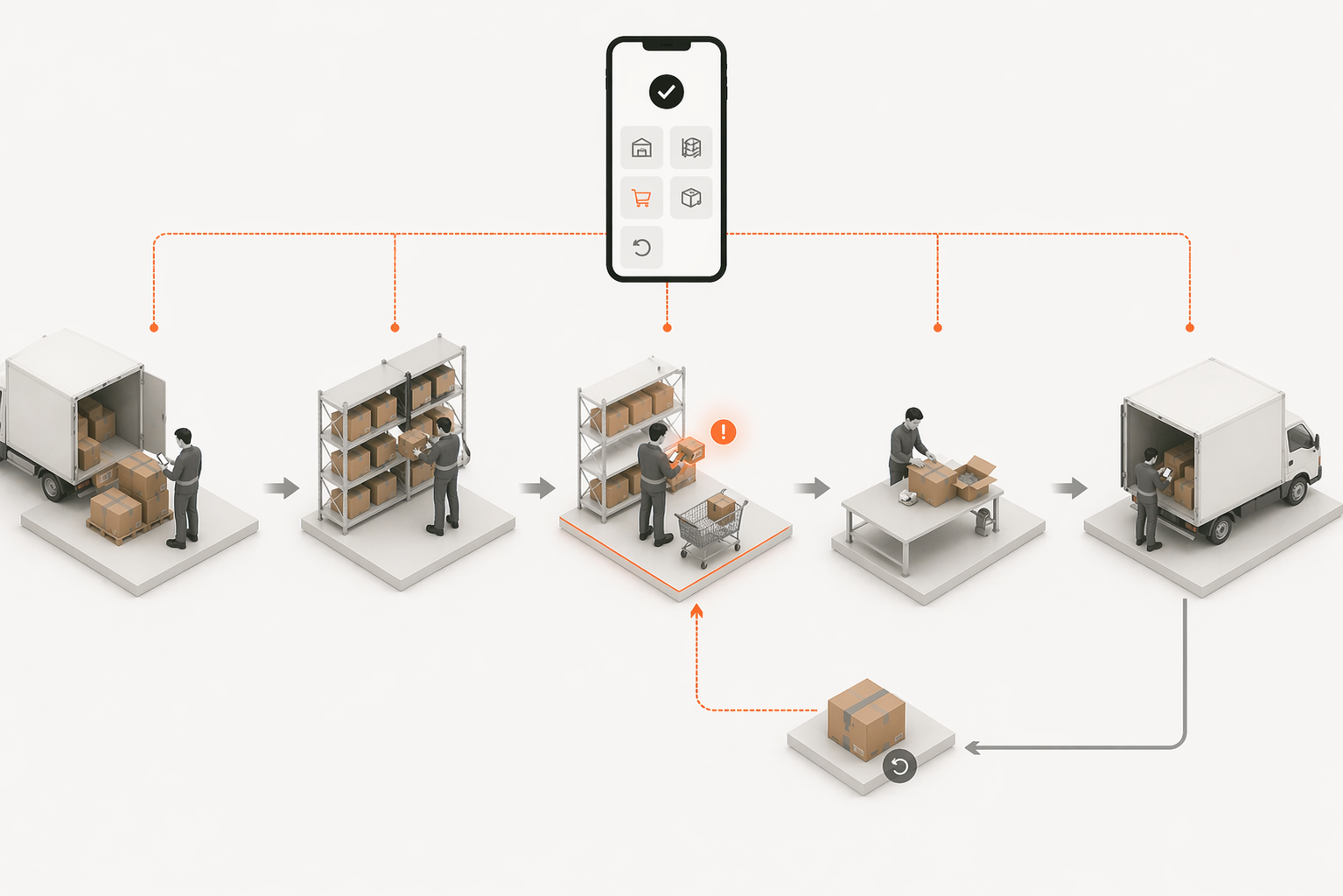
- Morning brief: which shades are below safety stock, which batches are within 60 days of expiry, which high-LTV customers are overdue a shade reorder
- Velocity alerts: which shades are selling significantly above forecast this week and will zero out before the next delivery
- Batch dashboard: which batch is currently being picked per shade, full traceability from PO receipt to order dispatch, expiry dates per active batch
- Return intelligence: which shades have return rates above their 90-day baseline, flagged for investigation before the pattern becomes a significant problem
The Shade Inventory Audit: Where to Start
Before implementing any system, establish your current variant-level exposure:
- Export your Shopify inventory CSV, filter to your top 5 products by revenue, and sort variants by quantity ascending
- For each variant with fewer than 14 days of stock at current 30-day velocity, calculate the gap against your supplier lead time
- Check whether your current warehouse process captures batch numbers and expiry dates at receiving — if not, you have zero FIFO enforcement today
- Pull your last 90 days of returns and manually calculate return rate per shade for your top 3 products — any shade above 8% return rate needs investigation
For most beauty brands, this audit reveals multiple shades within two weeks of a stockout, at least one batch approaching expiry undetected, and a return rate pattern in at least one shade that has been invisible because no system was connecting the data. For the fuller picture of where Shopify's native inventory tools stop, see where Shopify warehouse management begins.
LaSyncro surfaces shade-level stockouts, expiry risk, and high-LTV customer churn — before your customers find a competitor.
Start free