A customer finds your bestselling jacket. Adds size M to cart. Completes checkout. Pays. Then receives a cancellation email 20 minutes later because size M has been out of stock for three days — but Shopify showed the product as available because XL still had 4 units.
This is the defining inventory failure of apparel brands on Shopify. It is not a configuration error. It is a structural limitation of how Shopify displays and monitors inventory — and it gets worse as your catalogue grows.
Why Apparel Inventory Is Different
Most product categories have a manageable SKU count. A candle brand with 20 scents and 3 sizes has 60 variants. An electronics accessory brand with 50 products might have 200 variants total.
An apparel brand with 30 styles, 5 colours, and 8 sizes has 1,200 variants. Add footwear with width options and the number doubles. At this scale, the probability that at least one variant is incorrectly shown as available at any given moment approaches certainty.
The problem compounds because:
- High-velocity sizes sell out fastest — size M and L in any women's style, size 32/30 in denim — while slow-moving sizes accumulate stock. Shopify's product-level availability is dominated by the slow movers.
- Seasonal buys are made at the product level — buyers commit to a style and a colour, then estimate the size distribution. Size run imbalances are baked in from the purchase order stage.
- Returns reintroduce single-unit variants — a size S return brings that variant back to 1 unit, product shows as in stock, next customer to order size S triggers another cancellation cycle.
The Three Root Causes of Apparel Inventory Failure on Shopify
1.Product-level inventory display masking variant stockouts
Shopify's storefront logic shows a product as available if any variant has stock. This is a sensible default for most product categories — but it is catastrophically wrong for apparel.
The fix has two parts. First, configure your theme to show size-specific availability — most Shopify themes support variant-level sold-out states that grey out or hide unavailable options in the size selector. Second, implement variant-level monitoring in your warehouse system so your operations team sees which size-colour combinations are at risk before customers discover them.
The theme fix is cosmetic — it stops customers from ordering unavailable sizes. The warehouse fix is operational — it surfaces the problem early enough to reorder or reallocate stock before the variant hits zero.
2.No demand velocity monitoring per size-colour combination
Knowing that a product has 200 units in stock tells you nothing useful about its actual stockout risk. Knowing that size M in the navy colourway is selling 8 units per day and has 12 units remaining tells you that you have 36 hours before a stockout — enough time to reorder, reallocate from another location, or at minimum update your availability display.
This is variant-level demand intelligence. Shopify does not provide it natively. Without it, every size run stockout is a surprise — discovered either at checkout by a customer or during a manual stock count.
3.Pick processes that don't verify size at fulfilment
Even with accurate inventory counts, apparel brands face a pick error problem that other categories do not. A picker pulling a navy jacket in size L who grabs size XL by mistake creates two problems simultaneously: a wrong order shipped to a customer, and an inventory discrepancy that makes size L appear to have more stock than it does.
Scan-based pick verification — where the warehouse operator scans the barcode of the item they are picking and the system confirms it matches the order — eliminates this category of error entirely. Every scan is a confirmation that the right size, colour, and style is going into the right shipment.
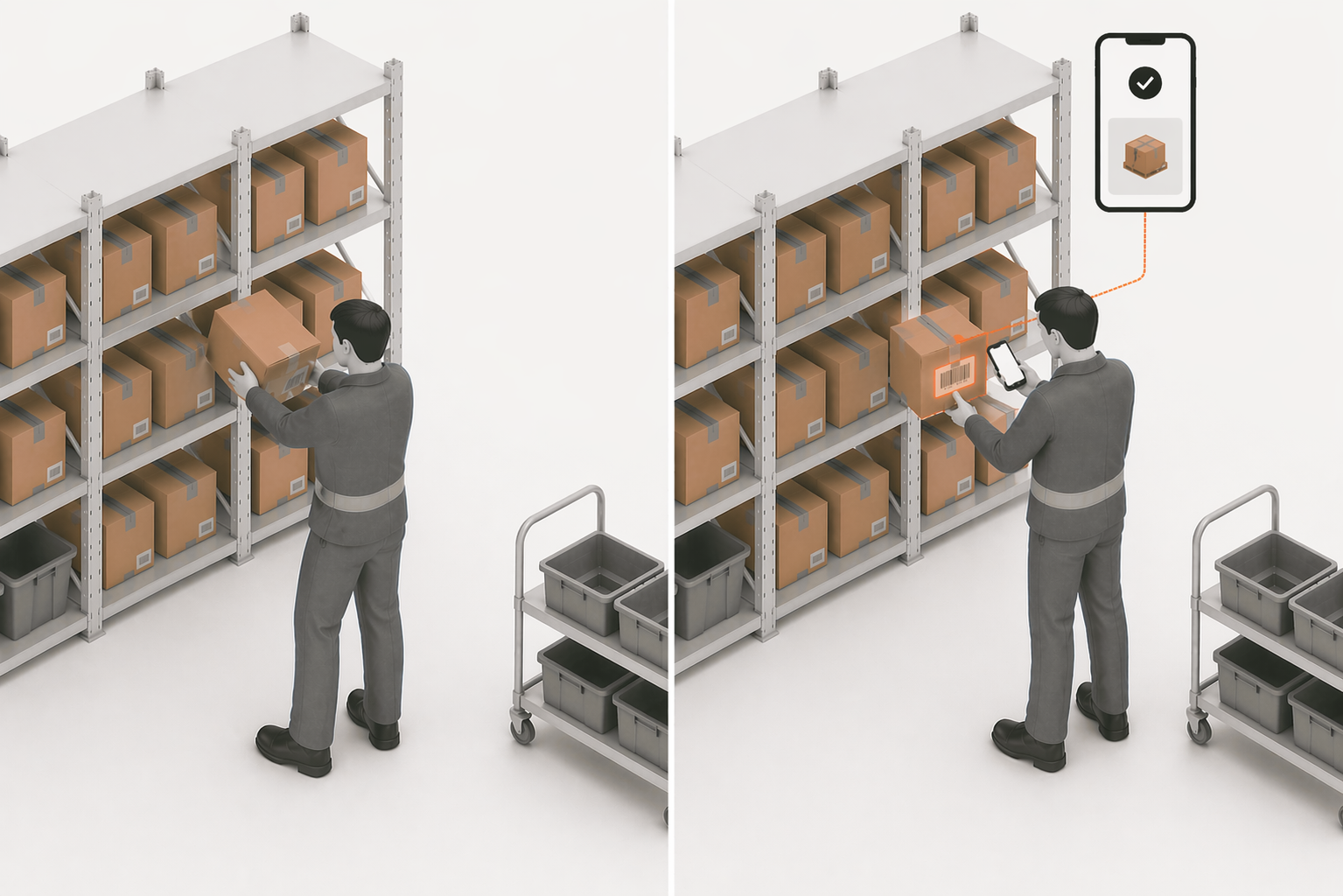
What Variant-Level Inventory Intelligence Looks Like in Practice
For an apparel brand processing 150 orders per day across 800 active variants, variant-level intelligence means:
- Morning brief: which size-colour combinations are below safety stock and need attention today
- Live alerts: which variants are selling faster than forecast and will zero out before the next delivery
- Pick queue: orders prioritised and routed so your team always picks the right variant with scan confirmation
- Supplier visibility: which purchase orders are due and whether incoming stock will cover the projected demand gap
This is not enterprise software complexity. It is the operational layer that sits between Shopify's inventory records and your physical warehouse — and it is what prevents the cycle of variant stockouts, customer cancellations, and reactive firefighting that most apparel brands accept as normal. See where Shopify's native tools stop and this operational layer begins for the full breakdown. See where Shopify's native tools stop and this operational layer begins for the full breakdown.
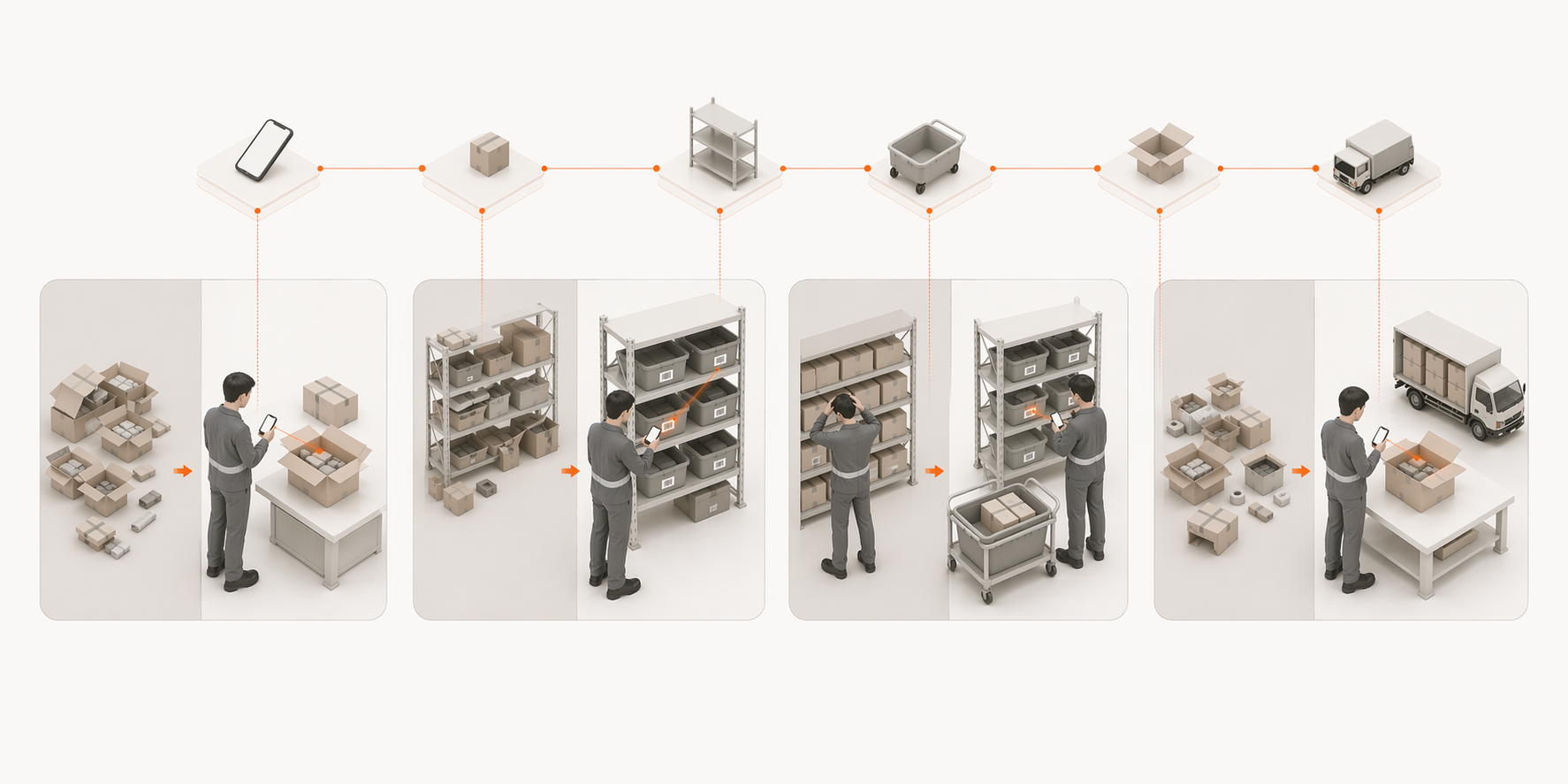
The Size Run Audit: Where to Start
Before implementing any system, establish your current variant-level exposure:
- Export your Shopify inventory CSV and sort by variant quantity ascending
- Identify every variant with fewer than 7 days of stock at current sales velocity
- Cross-reference against open purchase orders to confirm whether incoming stock covers the gap
- Flag any variant showing 1–3 units that has had a return in the last 14 days — these are your highest cancellation risk
For most apparel brands, this audit reveals 15–30% of active variants are within one week of a customer-facing stockout. The question is whether your system tells you before or after the cancellation email goes out.
LaSyncro surfaces variant-level stockouts in real time — before a customer finds out.
Start free