A fishing tackle YouTuber with 400,000 subscribers posts a review of a specific lure pattern. Within 90 minutes, 47 orders arrive across Shopify, eBay, and Amazon. You have 23 units in stock.
Your inventory sync runs every 5 minutes. In the first 5 minutes alone, 31 orders are accepted across channels before any count updates. You have oversold by 8 units before your warehouse team arrives for the morning shift.
This is the defining inventory failure of sports and hobby brands on Shopify. It is not caused by poor planning or insufficient stock. It is caused by the structural gap between how fast products sell during demand spikes and how often multi-channel inventory syncs run.
Why Sports and Hobby Inventory Is Different
Sports and hobby brands operate in a category with uniquely challenging inventory dynamics:
- Deep long-tail catalogues — a serious fishing tackle retailer carries 1,500+ SKUs; a model kit specialist carries 2,000+; a cycling parts brand carries 800+ compatibility variants; manual monitoring across this catalogue is impossible
- Irregular, trend-driven demand — sales velocity is not linear; a product can sit at 2 units per week for months, then sell 50 units in a day when a creator mentions it; no static reorder point catches this
- Multi-channel by necessity — sports and hobby buyers shop across Shopify, eBay, Amazon, and specialist marketplaces; being on one channel means losing sales to competitors who are on all of them
- Compatibility dependencies — cycling parts, model kits, RC components — many products only work with specific other products; a pick error creates the same immediate return dynamic as an auto parts fitment error
- Extreme seasonality — fishing gear in spring, cycling equipment in summer, winter sports in autumn; the right stock at the wrong time is overstock; the right stock at the right time is the entire business
The Four Operational Gaps Shopify Cannot Fill for Sports and Hobby Brands
1.Multi-channel sync lag creating simultaneous oversells
Every multi-channel sports brand using Shopify as their inventory source of truth faces the same structural problem: their channel integrations sync inventory on a schedule, not in real time. Shopify updates eBay's count every 5 minutes. Amazon's count every 10 minutes. During those windows, any fast-moving SKU can sell on multiple channels simultaneously.
Under normal trading conditions, this creates occasional oversell events on popular SKUs. During demand spikes — a trending product, a seasonal rush, a flash sale — it creates systematic overselling across your entire fast-moving catalogue.
The fix is a real-time inventory layer that sits above all channels and decrements from a single count the moment any sale occurs on any channel. When a lure sells on eBay, Shopify's count updates immediately. When the same lure sells on Amazon 30 seconds later, it reads the already-decremented count. The oversell window closes from 5–10 minutes to zero.

2.Trend-driven demand spikes invisible until after stockout
A product that sells 3 units per week has a reorder point set at 10 units — comfortable buffer, 3 weeks of safety stock. A YouTube review sends that product to 40 units per day. Your safety stock lasts 6 hours. Your reorder point never fires a meaningful alert because it was calibrated for normal velocity.
Shopify's inventory alerts are threshold-based — they fire when stock falls below a set number, regardless of the rate at which it is falling. A product at 10 units with a reorder point of 10 triggers an alert whether it is selling at 1 unit per week or 40 units per day. By the time the alert fires during a demand spike, you have hours of stock remaining rather than weeks.
The fix is velocity-based demand monitoring: a system that detects when a SKU's sales rate has increased significantly above its baseline and alerts your team while there is still time to act. A lure selling at 15× its normal rate with 23 units remaining is a different operational situation than a lure selling at normal rate with 23 units remaining. Your system should know the difference.
3.Compatibility-dependent products creating pick errors
Cycling parts, RC components, model kit accessories, fishing rod guides — many sports and hobby products only work with specific other products. A cycling brake cable housing that fits Shimano groupsets but not SRAM. A model kit cockpit detail set for the 1/48 scale version but not the 1/72 scale. An RC motor pinion gear in the wrong tooth count.
Like auto parts fitment errors, compatibility pick errors in sports and hobby create immediate returns regardless of product condition. The customer cannot use the wrong component. It goes back. The return costs outbound shipping, return shipping, and reprocessing — on an order that was already operating on thin margins.
Scan-based pick verification eliminates this category of error. The picker scans the part they are about to pick. The system confirms the compatibility match against the specific order. Wrong component flagged before it leaves the warehouse.
4.Seasonal overstock and understock across a long-tail catalogue
A fishing tackle brand's summer catalogue is its winter overstock. The challenge is that seasonal demand is not uniform across a 1,500 SKU catalogue — some products are strongly seasonal, some are year-round sellers, and some peak at unexpected times based on external factors like tournament schedules or weather patterns.
Manual seasonal planning across a catalogue this size inevitably produces two simultaneous problems: understock on the products that are spiking faster than forecast, and overstock on slow-moving inventory that is tying up cash and warehouse space.
The fix is SKU-level demand history with seasonal pattern detection: understanding not just how much of each SKU sold last year, but when it sold, at what rate, and whether the pattern is consistent or variable. This is the intelligence layer that turns seasonal buying from a best-guess exercise into a data-driven decision.
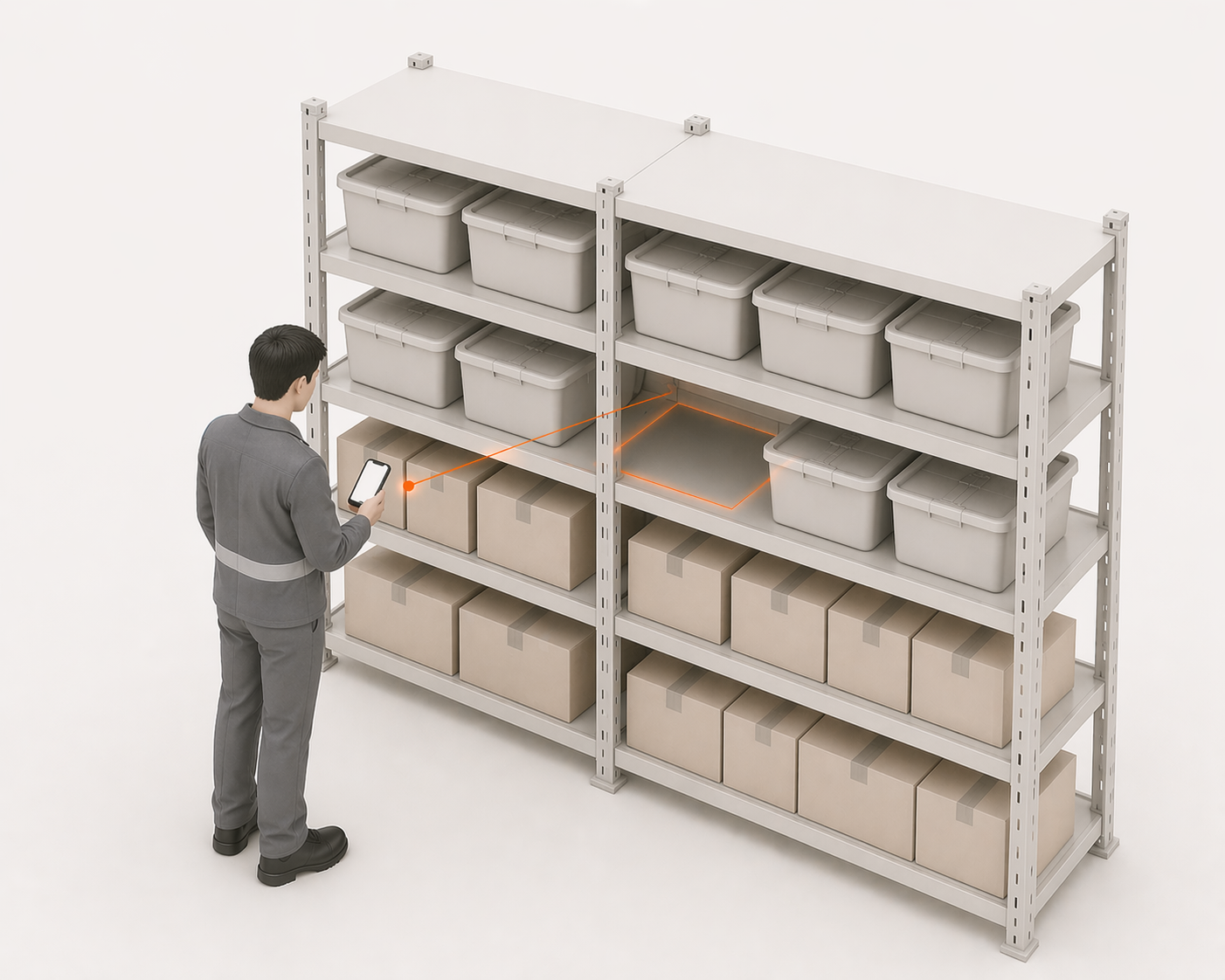
What Multi-Channel Inventory Intelligence Looks Like in Practice
For a sports and hobby brand processing 60 orders per day across 1,200 active SKUs on Shopify, eBay, and Amazon:
- Real-time inventory truth: single count decremented at every sale across every channel — multi-channel overselling structurally prevented
- Velocity alerts: SKUs selling significantly above their 30-day baseline flagged in real time — demand spikes detected with hours of stock remaining rather than after the stockout
- Compatibility pick verification: barcode scan confirmation on every compatibility-dependent pick — wrong component caught before it ships
- Seasonal intelligence: SKU-level demand history with seasonal pattern identification — buying decisions based on actual velocity data rather than last year's spreadsheet
The Sports and Hobby Inventory Audit: Where to Start
Before implementing any system, establish your current operational exposure:
- Pull your last 90 days of orders and identify every SKU that went out of stock — calculate how many orders were cancelled or unfulfilled as a result
- For your multi-channel SKUs, check whether you have had oversell events where the same unit sold on two channels simultaneously — these are your sync lag casualties
- Identify your top 20 SKUs by revenue and calculate their current days-of-stock at 30-day average velocity versus peak velocity — the gap between these two numbers is your demand spike exposure
- Pull your returns for the last 90 days and identify any that cite wrong component or compatibility mismatch — these are your pick accuracy casualties
For most sports and hobby brands operating across multiple channels, this audit reveals a pattern of recurring oversell events on fast-moving SKUs, at least one demand spike in the last quarter that caused significant stockout damage, and a meaningful percentage of returns attributable to compatibility pick errors. All three are preventable with the right operational layer between your warehouse and your sales channels — see where Shopify's native tools end and that layer begins for the full breakdown.
LaSyncro gives sports and hobby brands a single inventory truth across every channel — updated at every pick, every sale, every scan.
Start free