A mechanic has a car on the lift. They ordered a specific brake caliper for a 2019 Ford Focus 1.5T. The part arrives. It is for a 2019 Ford Focus 2.0T. Different caliper. Cannot be used. Goes back.
The return costs you the outbound shipping, the return shipping, the reprocessing time, and the reputational damage of a 1-star review that mentions sending the wrong part. The mechanic — who is now behind on their job and dealing with a frustrated customer — orders from a competitor next time.
This is the defining operational failure of auto parts brands on Shopify. And unlike most ecommerce return scenarios, it is entirely preventable — because the wrong part number was in the picker's hand before it went into the box.
Why Auto Parts Inventory Is Different
Auto parts operations combine three factors that individually create complexity and together create a uniquely difficult fulfilment environment:
- Fitment dependency — parts are not interchangeable; the same brake pad comes in 40 fitment variants across makes, models, years, and trim levels; a pick error is never a minor issue
- Dense catalogue — a serious auto parts retailer carries 800–5,000 active SKUs, many with similar part numbers and near-identical physical appearances; visual identification under picking pressure fails regularly
- Mixed customer base — B2C enthusiasts and B2B workshop accounts have completely different urgency, value, and SLA requirements that a single undifferentiated pick queue cannot serve
Add multi-channel selling across Shopify, eBay, and Amazon and you have an inventory sync problem that creates overselling risk every time a part sells simultaneously on two channels before the stock count updates.
The Four Operational Gaps Shopify Cannot Fill for Auto Parts Brands
1.No pick verification against fitment requirements
Shopify processes an order. The pick list goes to the warehouse. A picker walks to the location, grabs what looks like the right part, and puts it in the box. The part number on the shelf looks right — but it is one digit different from the ordered part. The caliper is for the 2.0T, not the 1.5T.
Shopify has no mechanism to catch this. The order is fulfilled. The wrong part ships.
Scan-based pick verification eliminates this entirely. The picker scans the barcode of the part they are about to pick. The system confirms whether the scanned part number matches the specific order's fitment requirement. If it does not match, the pick is rejected before the part goes in the box. The picker is directed to the correct location.
This single intervention — barcode scan confirmation at pick — eliminates fitment errors as a return category. Not reduces. Eliminates.
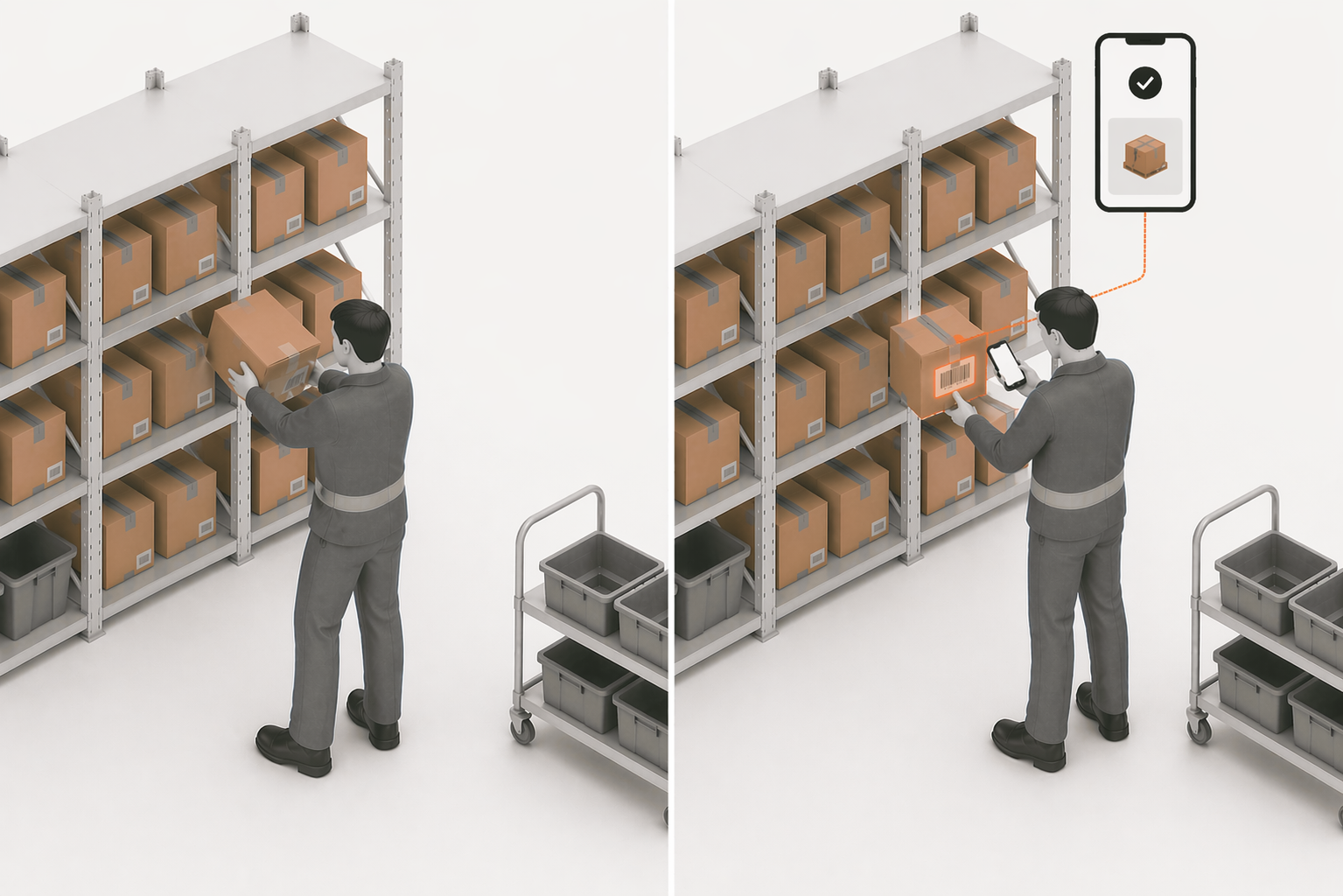
2.Dense catalogue with visually similar parts
800 SKUs in a warehouse sounds manageable. In auto parts, it means hundreds of brake pads, calipers, filters, and sensors that look nearly identical and whose part numbers differ by one or two characters. Under picking pressure — during a busy morning with 50 orders to process — visual identification fails at a rate that compounds quickly.
The fix is bin-level location management combined with scan verification. Every part has a specific bin location. The pick list directs the picker to the exact bin. The picker scans the part at that bin. The system confirms the match. The cognitive load of visual part identification is replaced by a mechanical confirmation process that works regardless of catalogue density or picking pressure.
3.B2B workshop accounts with SLA requirements Shopify cannot prioritise
A workshop with a car on the lift needs parts today. A retail customer who ordered performance parts for a weekend project can wait three days. These two orders in the same pick queue, processed in date order, mean the workshop waits while the enthusiast's order ships first.
Shopify has no concept of customer tier, SLA priority, or B2B account management in its fulfilment workflow. Every order is an order. The pick queue is chronological.
The operational fix is SLA-ranked order prioritisation: a system that identifies B2B workshop accounts, assigns them a priority tier, and surfaces their orders at the top of the pick queue regardless of order time. A workshop account that generates $3,000 per month in recurring orders should never wait behind a $45 retail order placed 20 minutes earlier.
4.Multi-channel inventory sync creating overselling risk
Most auto parts brands sell across Shopify, eBay Motors, and Amazon Automotive simultaneously. A fast-moving part — a popular filter, a common brake pad fitment — can sell on two channels within seconds of each other. If the inventory sync between channels runs on a 5-minute cycle, both orders are accepted before either channel updates. You have sold the last unit twice.
Shopify does not solve this. Each channel integration syncs on its own schedule. The faster your parts move, the higher the probability that simultaneous channel sales create an oversell before the sync catches up.
The fix is a single inventory truth layer that sits above all channels and decrements in real time from every sale, every pick, and every warehouse movement. When a part is picked for an eBay order, Shopify's count decrements immediately — not on the next sync cycle. This is the same gap covered in where Shopify warehouse management begins and the best WMS for Shopify small business comparison.
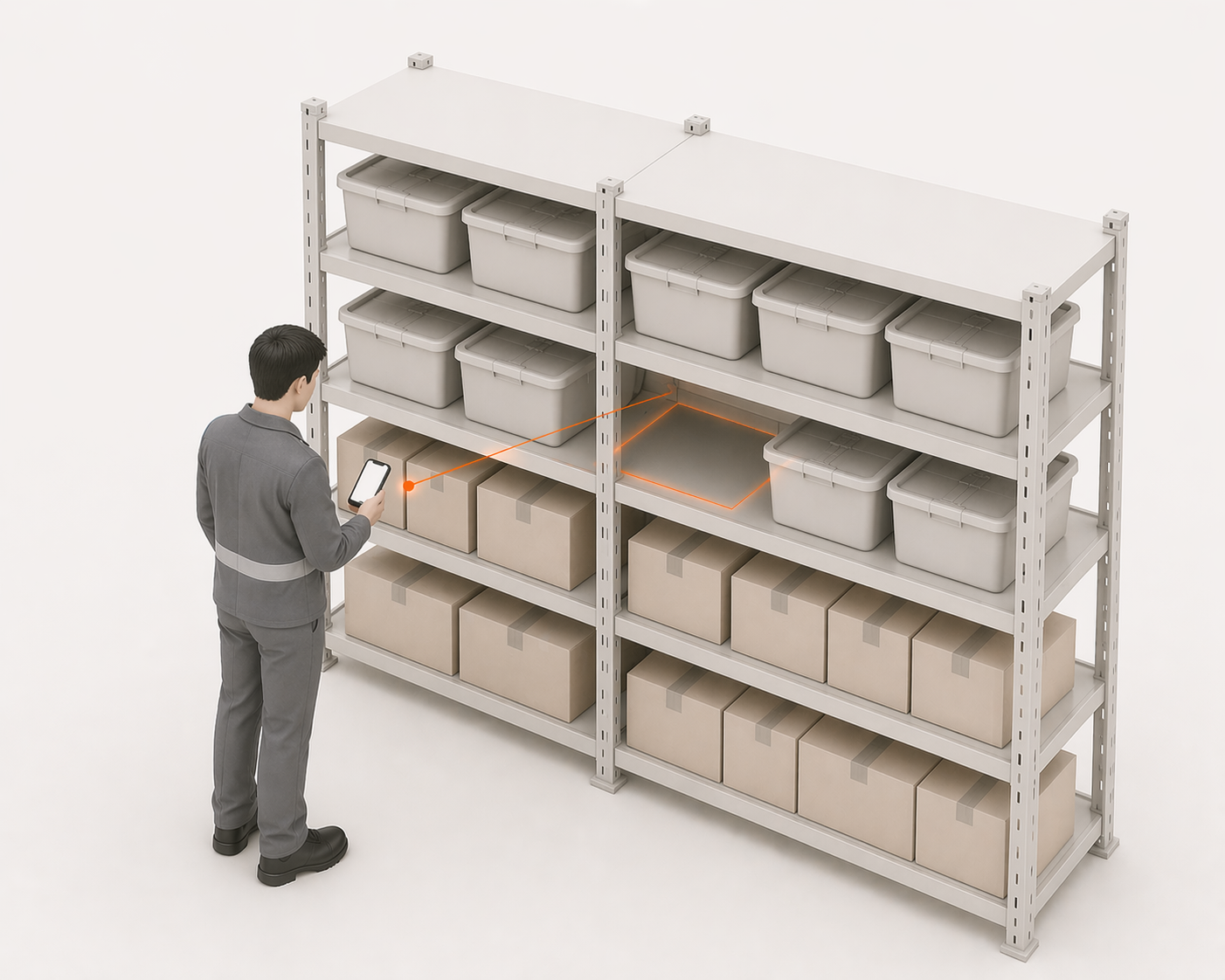
What Auto Parts Operational Intelligence Looks Like in Practice
For an auto parts brand processing 80 orders per day across 2,000 active SKUs with a mix of B2C and B2B workshop accounts:
- Priority pick queue: workshop orders surfaced first, SLA countdown visible per order, never buried behind retail orders
- Scan verification: every pick confirmed against order fitment before the part goes in the box, fitment errors caught at pick not at customer delivery
- Inventory truth: single stock count updated at every scan across all channels, multi-channel overselling structurally prevented
- Supplier scorecard: which distributors consistently deliver the wrong part, short quantities, or outside the agreed lead time — tracked automatically per delivery
The Auto Parts Operations Audit: Where to Start
Before implementing any system, establish your current operational exposure:
- Pull your last 90 days of returns and calculate what percentage cite wrong part or fitment mismatch as the reason — this is your fitment error rate
- Calculate the total cost of those returns: outbound shipping + return shipping + reprocessing time + lost customer value
- List your top 10 B2B workshop accounts by revenue and check whether their orders are consistently fulfilled within their expected timeline
- For parts sold across multiple channels, check whether you have had any oversell events in the last 90 days where the same unit sold on two channels simultaneously
For most auto parts brands, t
LaSyncro's scan-based pick verification eliminates fitment errors before they leave your warehouse.
Start free